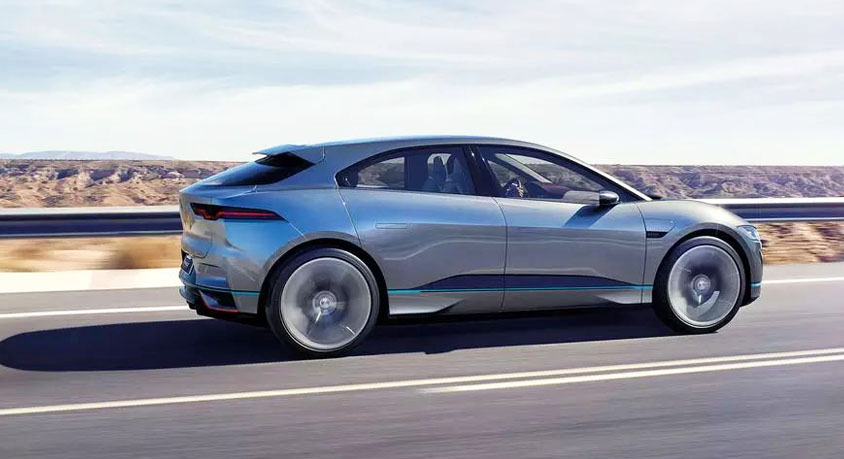
There is a moment in the manicured showroom, under the stark, gallery-like lighting, where the new Jaguar feels less like a car and more like a manifesto printed in aluminum and carbon fiber. The leaping cat badge is gone, replaced by a stark, modernist wordmark. The sinuous curves and gentleman’s club warmth of the old F-Type or XJ are absent, supplanted by sharp creases, dramatic negative spaces, and an interior that looks like a set piece from a speculative fiction film. This is not an evolution; it is an erasure. Driving the first product of this scorched-earth policy, the 2026 Jaguar J-Code (a placeholder name as clinical as its demeanor), forces a singular question: can a brand survive not just a switch from internal combustion to electric propulsion, but a complete, deliberate amputation of its own historical soul in the hopes that a new, avant-garde one will grow in its place? This is a test not of range or horsepower, but of brand alchemy.
The driving experience delivers a paradox that defines the entire endeavor. The instantaneous, silent thrust from the dual-motor, 600-horsepower powertrain is objectively brutal, launching the two-ton coupe-SUV from 0 to 60 mph in a claimed 3.8 seconds. The chassis, with its standard air suspension and rear-axle steering, is unflappably competent, ironing out imperfections on Pacific Coast Highway while remaining flat and composed through sweeping corners. It is profoundly capable, yet profoundly anonymous. The theatrical, sometimes flawed, personality of a supercharged V8—the snarl, the slight tail-happiness, the sense of a living, breathing machine—has been replaced by the flawless, sterilized execution of a physics algorithm. You are not driving a Jaguar; you are piloting a very competent, very expensive EV that happens to be wearing a Jaguar nametag, a sensation familiar to drivers of many German rivals but alien to the brand’s traditional promise of "grace, space, and pace."
This sensory disconnect is most acute inside the cabin. The materials are exquisite—recycled textiles that feel like suede, machined aluminum controls, sustainably sourced wood veneers etched with geometric patterns. Yet, the design language is so fiercely minimalist, so intent on rejecting "retro" or "heritage," that it creates an emotional vacuum. The classic analog clock, the rich veneers, the intuitively grouped physical switches—all are banished. In their place is a panoramic digital display that spans the dashboard, operated via a combination of touch, voice, and a small, haptic-feedback crystal rotary controller. It is stunning to look at and, after a steep learning curve, logically laid out. But it offers no tactile joy, no warm familiarity. It feels like the headquarters of a very tasteful, very ruthless tech conglomerate, not the cockpit of a car with 90 years of sporting history. For the traditional Jaguar buyer who valued a sense of occasion and layered craftsmanship, this is a cold betrayal.
From a commercial standpoint, Jaguar’s pivot is a Hail Mary pass born of necessity. Its previous generation of sedans and SUVs, while often brilliant to drive, languished in a no-man’s land between volume German luxury and ultra-luxury players, plagued by perceptions of poor reliability and residual value. The new strategy—to drastically reduce volume, target a far wealthier, design-centric clientele, and compete directly with Aston Martin and Bentley on artistry rather than BMW on dynamics—is a recognition that it could not win the old game. The J-Code’s estimated starting price of $125,000 confirms this; it is no longer trying to be a better sports sedan than a 5 Series, but a more daring artistic statement than a DBX.
The gamble, however, is astronomically high. The avant-garde luxury market is tiny, fickle, and already crowded. A buyer considering a $150,000 electric coupe has a myriad of established choices that blend performance, luxury, and a coherent brand story—the Porsche Taycan, the Mercedes-AMG EQE, the Lucid Air Sapphire. Jaguar is asking that buyer to not only adopt an unproven EV platform from a historically troubled brand, but to also buy into a completely new and unformed aesthetic identity. It is trading a known, if diminished, audience for a hypothetical one that may not materialize. The new brand’s success hinges not on beating competitors in a drag race, but on becoming a coveted object in the rarefied world of high design, a realm where automotive benchmarks often matter less than cultural cachet.
Ultimately, the 2026 Jaguar presents an unresolved equation. As a piece of engineering and isolated design, it is impressive, coherent, and boldly executed. As a Jaguar, it feels like a stranger. The question of whether this is suicide or rebirth cannot be answered by a week-long test drive; it will be answered in the quiet, moneyed enclaves where status is purchased. Has Jaguar successfully performed a soul transplant, grafting a vibrant, future-focused identity onto its legacy? Or has it merely removed the soul altogether, creating a beautiful, capable, but ultimately soulless vessel that fails to resonate with anyone—neither the old guard who loved what it was, nor the new elite who have more established provocations to choose from? The car doesn’t provide an answer; it simply poses the question, loudly and expensively, with every silent, startlingly quick mile it covers. Nirvana is only possible if something truly new and desirable emerges from the ashes. Currently, we are still in the heat of the fire, watching the familiar shapes melt away, uncertain of what, if anything, will take their form.
Disclaimer: Mention of any brand or trademark is for identification only and does not imply partnership or endorsement