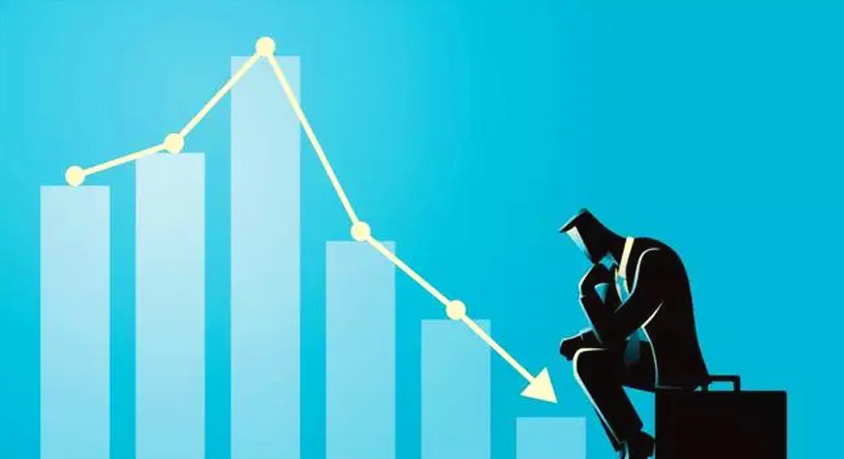

If you watch the market plummet 3% in an hour on seemingly no news, feel your heart race, and your finger hover over the "sell" button to "preserve capital," you have just become the precise fuel for the engine that caused the drop. That crash wasn't about a sudden, collective realization that the economy is broken. It was likely a mathematical chain reaction executed by machines that don't feel fear, only signals. Most people believe market crashes are driven by human emotion—panic, greed, fear. While that's the catalyst for individuals, they are actually wrong about the scale and speed. The modern market's violent downdrafts are increasingly engineered by quantitative funds executing strategies that harvest volatility and liquidity, turning your emotional response into their profit. Having built algorithmic systems, I can tell you this is not malice; it's mechanized logic. The machines are designed to act, not think. And your panic is the most predictable, exploitable input in their entire model. When you sell into a crash, you aren't escaping it; you are completing its circuit, providing the liquidity their algorithms desperately need to close their positions at your expense.
Quant funds run strategies with names like Risk Parity, Volatility Targeting, and Trend-Following (CTA). Their core mandate is not to pick stocks but to manage risk based on mathematical factors. Here's how a crash gets manufactured: A mild negative shock hits the market. A volatility spike is detected. A "volatility targeting" fund is programmed to maintain a constant level of portfolio risk. As volatility rises, its computer automatically sells assets to reduce exposure and bring risk back down. This selling pushes prices lower, which increases volatility further, triggering more automated selling from other volatility-sensitive funds. Simultaneously, trend-following algorithms see the price drop cross a critical moving average threshold. Their signal flips from "buy" to "sell," unleashing a wave of systematic liquidation. This creates a self-reinforcing feedback loop—a liquidity cascade. The selling isn't based on a fundamental view of company value; it's based on a model reacting to price and volatility data. The machines are talking to each other, and the conversation is a panic spiral.
Your role in this? You are the exit liquidity. The algorithms need someone to buy what they are mechanically selling into a falling market to close their positions. Your market sell order, driven by primal fear, provides that liquidity at a terrible price. You absorb their sell pressure. Meanwhile, other quant strategies, like market-making arbitrage or volatility harvesting, are poised to profit from the widened bid-ask spreads and extreme price swings your panic helps create. Ordinary investors see a crashing market and think, "Everyone knows something I don't." Masters of market structure see a liquidity event. They understand the sell-off is technically driven and likely overshoots fundamental value because the machines don't care about value; they care about parameters. Your panic is the final, crucial ingredient that turns their systematic rebalance into a profitable trade. You are not a participant; you are the resource being mined.
This creates a perverse symbiosis. The quant models are designed to be systematically indifferent. They will sell until their risk metrics are satisfied, regardless of price. This creates short-term price distortions—massive gaps between price and underlying value. Your human emotion is the only thing that can make those distortions permanent by crystallizing a loss. The machines create the storm; your panic selling is the act of shipwrecking yourself within it.
So, what is the actionable framework to avoid being harvested? I advise you to stop making decisions in the storm. Your strategy must be built during the calm. Implement this three-part Volatility Inoculation Protocol. First, Set Hard Rules, Not Feelings. Before any market stress, write down your rules. For example: "I will only check my portfolio once a week, regardless of market news. I will not sell any equity position during a market hours decline of more than 2%. Any rebalancing will occur on a predetermined calendar date, not in response to volatility." This script overrides your emotional firmware. Second, Identify the Signal vs. the Algorithmic Noise. Ask this question during a sharp drop: "Has there been a material, fundamental change in the long-term prospects of the companies I own, or is this likely a volatility/technical event?" If it's the latter—no major earnings warnings, no sector disruption—recognize it as machine-driven noise. Your job is to ignore noise, not fund it. Third, Flip the Script: See Volatility as a Forced Opportunity. The masters don't see a crashing market; they see a machine-generated sale. Their pre-defined plan might include a shopping list of quality assets and a limit order set 5% below the pre-crash price, waiting to catch the overshoot caused by the algorithmic liquidation. They are not buying the dip emotionally; they are executing a planned capital deployment into a temporary distortion.
The greatest power you have in a market dominated by quantitative strategies is your ability to be irrational in your discipline. The machines are rationally programmed to sell. You must be irrationally committed to not feeding them. Your financial plan should be a bunker against their storms, not a source of fuel for their fire. When you feel the urge to panic sell, understand that urge is the target the entire system is designed to hit. Refuse to be the completion of their trade. Stay patient, stay mechanical with your own rules, and let the algorithms churn against each other. The volatility they harvest will come from those who trade on emotion. Don't let it be you. Your portfolio's survival depends less on predicting the machines and more on removing your emotional capital from their equation. In the end, the most sophisticated algorithm you can deploy is your own pre-commitment to inaction when everyone—and everything—else is frantically moving.
Disclaimer: Mention of any brand or trademark is for identification only and does not imply partnership or endorsement