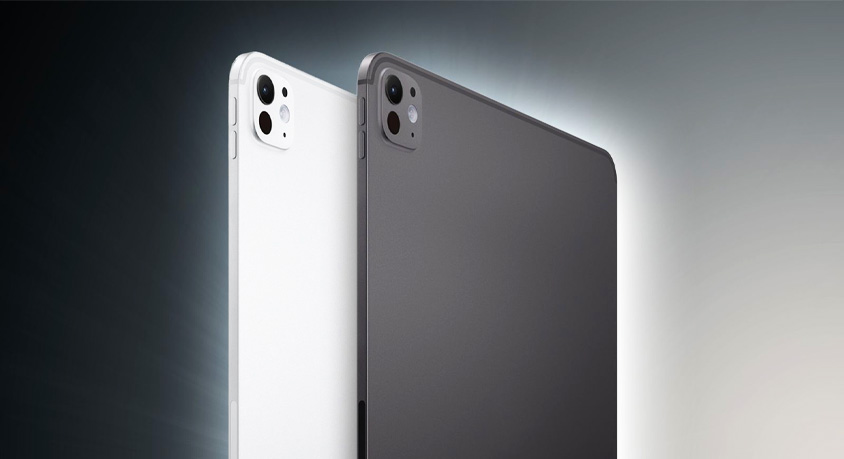
There is a peculiar frustration in holding a device that benchmarks like a desktop, renders like a workstation, and then stops you from saving a file where you want. This is the paradox of the new iPad Pro M5. On paper, it is a marvel—a tablet whose hardware rivals laptops costing twice as much. The M5 chip, built on third-generation 3-nanometer architecture with neural accelerators in every GPU core, generates AI art 56% faster than its predecessor and handles ray tracing that seemed impossible in a device this thin just years ago. Yet after weeks with the 13-inch model, I am left with an uncomfortable conclusion: this is the most powerful computer I am not allowed to use. The hardware screams "pro"; the operating system whispers "patient."
The physical object deserves admiration. At 5.1mm thick and 579 grams, the 13-inch model is over 100 grams lighter than the M1 iPad Pro. The Ultra Retina XDR display delivers 1000 nits sustained brightness and 1600 nits peak for HDR. Colors feel dimensional. For the first time, external 4K displays run at full 120Hz. The Nano-texture glass option makes outdoor work viable. This is hardware designed for professionals on the move.
The numbers are staggering. The M5's 10-core CPU and 10-core GPU paired with 16GB of unified memory score around 15,300 on Geekbench 6 multi-core—nearly twice the M1 iPad Pro. GPU scores exceed 74,000, a 35% jump from the M4. DaVinci Resolve renders faster. Local AI image generation completes Stable Diffusion tasks in 36 seconds versus 83 seconds on the M4. Storage speeds have doubled. The new N1 chip delivers Wi-Fi 7, and cellular models offer dramatically improved power efficiency. Using the iPad as a hotspot for hours barely dents the battery.
And yet. The problem is what you can actually do with this power. As one analyst noted, the M5's neural advances amount to little on iPadOS because "there is no serious app ecosystem for local AI development." The Terminal is absent. MLX runs on the Mac. On the iPad, we get curated apps and the haunting sense of untapped potential. Apple built a chip for the AI era, but iPadOS is still designed for the app era.
Memory management tells the same story. iPadOS aggressively terminates background apps rather than paging them to disk. You can have 16GB of RAM and still lose your place in a browser tab when switching between pro apps. The system prioritizes smoothness over sustained workflows. The iPad always looks ready, but it never feels free.
Pro apps reveal the limits. DaVinci Resolve blocks MKV and RED RAW files. Final Cut Pro ships without round-tripping, limited color tools, and no plugin support. The hardware begs to be used; the ecosystem remains a walled garden.
Who is this for? If you are an illustrator using Procreate, the M5 is a dream. The Nano-texture glass and Pencil Pro create a drawing experience rivaling Wacom. If you cut proxies on planes, the speed and display make it a capable secondary tool. If you cull photos on location, Thunderbolt and the OLED screen are hard to beat. The iPad excels at consumption, annotation, and lightweight creation.
But if you are a developer, a data scientist, or anyone whose workflow involves scripts, folders, or professional plugins, the iPad will frustrate. The Magic Keyboard brings total weight to 1.26 kilograms—essentially a MacBook Air. You carry laptop weight with tablet limitations. The file system remains opaque. External drive support is inconsistent. Managing a project feels like fighting the OS.
For owners of 2018 iPad Pros or M1 models, the M5 is a monumental leap. The screen alone justifies the upgrade. For M4 users, the gains are real but subtle. The question is whether software has finally caught up to hardware. iPadOS 26 brings improvements, but it does not transform the device's identity. The iPad remains an appliance, not a platform.
The irony is that the M5 may be too good for its own good. It exists where capabilities exceed permissions. You feel the potential every time you hit a limitation. The hardware is ready for the future; the operating system negotiates the present. Until Apple grants iPadOS the freedoms of macOS, the iPad Pro will remain the most powerful computer you are not fully allowed to use. Buy it for the screen, the speed, the pencil. Just do not expect it to replace your laptop.
Disclaimer: Mention of any brand or trademark is for identification only and does not imply partnership or endorsement