We have become accustomed to being watched. Security cameras monitor our streets. Our phones track our location. Our browsers follow our clicks. But these forms of surveillance have always carried implicit signals: the dome camera on the ceiling, the location permission pop-up, the targeted ad that betrays a search from hours ago. They are visible, or at least traceable. The next frontier of computing threatens to erase even these subtle cues. With Apple rumored to be entering the smart glasses market and established players like Xreal refining their AR eyewear, we are approaching a point where the device that sees everything becomes indistinguishable from the ordinary. The question is no longer about what these glasses can do. It is about what happens to public space when no one knows whether they are being recorded.
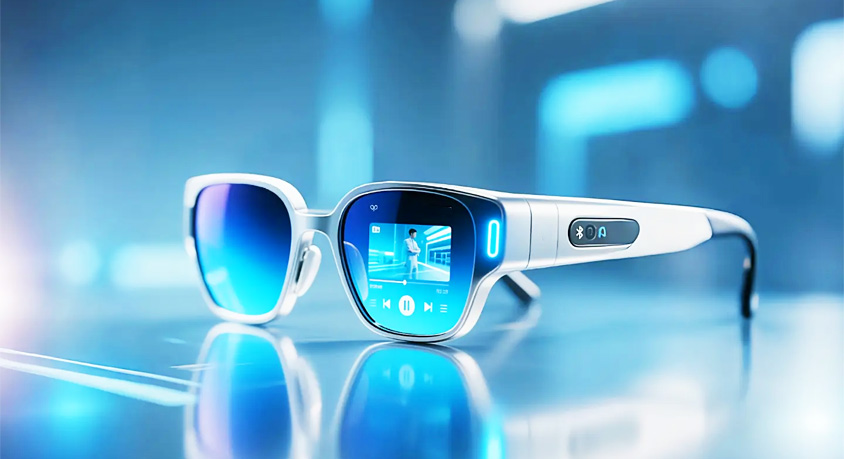
The rumored Apple glasses are described as looking like normal eyewear, constructed from lightweight aluminum and polished glass, weighing under 100 grams to be worn all day. The Xreal 1S, currently available, takes a more utilitarian approach. It is a curved visor that attaches to your existing glasses or sits alone, tethered by a cable to a computing puck or your phone. Both are designed to disappear, not physically, but socially. They aim to look enough like regular glasses that a stranger on the street wouldn't glance twice. For a user navigating a new city with turn-by-turn directions projected onto the real world, this seamlessness is the dream. For everyone else, it is the beginning of an unspoken anxiety.
The display technology is genuinely impressive. The Xreal 1S projects a 130-inch virtual screen at a distance of four meters. Watching a movie on a plane or viewing 3D architectural models on a job site becomes a private, immersive experience that requires no bulky headset. The rumored Apple device is expected to take this further, integrating with the broader ecosystem to overlay notifications, messages, and contextual information directly into your field of view. The resolution and brightness on both platforms have reached a point where virtual content is legible even in moderately lit environments. For a field service technician consulting a repair diagram while keeping both hands on a machine, or a surgeon viewing patient data without looking away, the productivity gains are undeniable.
The audio, in both cases, is delivered through bone conduction or open-ear speakers. You remain aware of your surroundings, which is safer for walking city streets. But it also means that your private calls and audio are slightly audible to those standing very close. For a commuter taking a quick call on a crowded train, this creates a new social awkwardness: the person next to you can hear both sides of your conversation, but can't tell if the glasses are also recording video.
And here is the core of the problem. The Xreal 1S has a camera. The rumored Apple glasses will almost certainly have multiple cameras, lidar scanners, and the processing power to run real-time AI recognition. The specifications are impressive: 12-megapixel sensors, wide-angle lenses, and battery life designed to last through a day of intermittent use. But the experience they enable is where the social contract begins to fray.
Imagine a first date at a quiet bar. Across the room, someone is wearing a pair of stylish, unremarkable glasses. You have no way of knowing if those glasses are simply correcting vision, or if they are running facial recognition, cross-referencing your social media profiles, and displaying your name, occupation, and recent Instagram posts to the wearer. You have no way of knowing if your conversation is being recorded, analyzed for sentiment, or stored in a cloud database to train future AI models. The polite stranger across the room might be a product tester, a data collector, or simply a curious early adopter. The ambiguity itself becomes a form of social pollution.
This is not a hypothetical dystopia. The technology exists. Facial recognition algorithms are mature. Real-time translation, object identification, and scene analysis are already features on our phones. Putting them in glasses merely removes the final barrier: the act of pulling out a device. Surveillance becomes casual, ambient, and undetectable.
The Xreal 1S, for its part, attempts to address this with a small LED that illuminates when the camera is recording. But LEDs can be blocked with tape, or ignored by those who don't know what they signify. The rumored Apple device will likely include similar indicators, but the history of technology suggests that the race to normalize the form factor will outpace the social education required to make those indicators meaningful. Most people won't know what the light means. Most people won't even notice it.
Who, then, are these devices for? The Xreal 1S is for the early adopter and the developer, the person who wants to build the future of computing and is willing to tolerate a tethered, slightly awkward form factor to do so. The Apple glasses, if they arrive, will be for the mainstream user who wants navigation, notifications, and media consumption without pulling out a phone. They are not for the person who values their own privacy, because the very act of wearing them contributes to the erosion of everyone else's. They are not for the person who believes that a conversation in a public place should remain ephemeral, not captured and analyzed.
The introduction of always-ready, undetectable cameras into public space represents a fundamental shift in the nature of social trust. We have always navigated the world with an implicit understanding: that our interactions are fleeting, that the stranger we pass on the street will forget our face by the next block. Smart glasses replace that implicit trust with perpetual uncertainty. The question is not whether the technology will be useful. It will be. The question is whether we are willing to trade the last refuge of unobserved human interaction for the convenience of never having to reach into our pocket. And by the time we realize what we have lost, the glasses will be everywhere, and no one will remember to look for the light.
Disclaimer: Mention of any brand or trademark is for identification only and does not imply partnership or endorsement