I was standing in the garage of a buddy who swears by his Honda Accord 2.0T. He’d just finished a 400-mile road trip from Atlanta to the Florida Panhandle, towing a small utility trailer loaded with camping gear. The outside temperature was hovering around 97 degrees. He popped the hood, pulled the dipstick, and the oil that dripped onto his fingertips looked like water. It had no viscosity. No cling. It ran off his skin like tap water. He looked at me and said “That’s the 0W-20 the manual says to use. Feels thin, right?” I didn’t say “right.” I said “that’s the oil the EPA wants you to use, not the oil your engine wants you to use.” He changed it to a 5W-30 the next day. The engine got quieter. The hot idle oil pressure came up. And he stopped worrying about whether his turbocharger bearings were getting the film strength they needed.
The 0W-20 and 0W-16 oils that fill the pages of modern owner’s manuals are not there because your engine’s bearings suddenly developed a preference for watery lubricants. They’re there because the manufacturer needed to squeeze 0.2 percent better fuel economy out of the CAFE testing cycle. That’s it. That’s the whole story. The engine—whether it’s a Toyota Camry’s 2.5-liter, a Ford F-150’s 3.5-liter EcoBoost, or a Honda CR-V’s 1.5-liter turbo—was designed with bearing clearances that can tolerate thin oil, sure. But “tolerate” is not the same as “thrive.” And if you live somewhere with actual summer heat, or if you tow anything, or if you have a lead foot on a mountain pass, that 0W-20 is providing about as much protection as sunscreen in a blizzard.
I’ve spent enough years cutting open oil filters and sending samples to Blackstone Laboratories to know the pattern. The engines running the factory-recommended 0W-20 in hot climates or under heavy loads consistently show elevated wear metals. Iron. Copper. Lead from the bearings. The engines running a 5W-30 or a quality 0W-40? Their wear numbers drop. Sometimes by half. This isn’t opinion. This is data. But the manufacturers don’t talk about it because if they admitted that a thicker oil provides better protection, they’d have to explain why they recommended the thinner stuff in the first place. And that explanation—fuel economy credits—doesn’t make for a good warranty brochure.
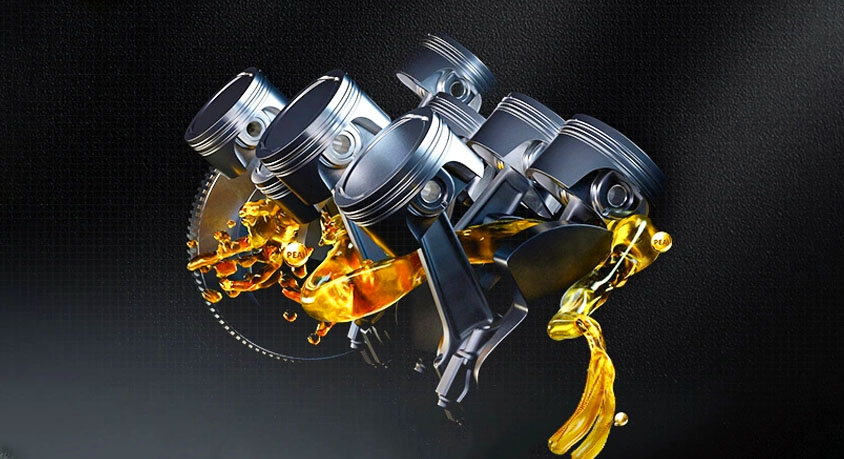
Now, I can hear the keyboard warriors already. “But the clearances are tighter now!” they’ll say. “The oil pumps are designed for low viscosity!” Let me stop you there. A 5W-30 at operating temperature is not molasses. It’s not 20W-50 from your grandfather’s Chevy small-block. It’s still a modern, synthetic, high-flow oil. The difference is film strength. When your engine is sitting at 220 degrees on a highway pull in August, that 0W-20 shears down. The viscosity modifiers break apart. What started as a 20-weight oil becomes a 15-weight oil, and then it starts to squeeze out of the rod bearing clearance like water through a pinched hose. A 5W-30, especially a high-quality full synthetic, holds its grade. It stays between the bearing and the crank. It keeps metal from touching metal.
Let’s use a real-world example because this matters. Take a Subaru Outback with the 2.5-liter engine. Subaru specifies 0W-20 for fuel economy. That engine is known for consuming oil if you actually drive it hard, especially in places like Arizona or Texas. Switch to a 5W-30? Oil consumption drops. The timing chain rattle on cold starts? Gone. The engine just runs happier. Compare that to a Mazda CX-5 with the 2.5-liter. Mazda also calls for 0W-20 in most markets, but in hotter regions or for the turbo version, they quietly allow 5W-30. Why? Because their engineers know that under real heat, the thicker oil is the difference between a motor that goes 150,000 miles and one that starts knocking at 80,000.
I’m not saying you should dump 10W-40 diesel oil into your new Toyota Corolla and call it a day. But if you live in the Sun Belt, if you tow a boat, if you drive up mountain grades, or if you just like the idea of your engine lasting past the lease term, step up one grade. A 5W-30 or a 0W-30 with the proper API or ACEA certification is a better choice. I run a 5W-30 in my personal Honda Civic Si, which the manual says wants 0W-20. I’ve done it for 70,000 miles. My oil analysis reports come back looking like a brand-new engine. The car pulls harder on hot days. The valvetrain is quieter. And I don’t spend my drives listening for the sound of a timing chain that’s trying to stretch itself into oblivion.
The sensory difference is real. On a hot day, after a hard pull onto the highway, a car with 0W-20 has a certain harshness. The engine sounds busy. Frantic. A little rattly. Switch to a quality 5W-30, and that same engine develops a muffled, solid hum. It feels like the rotating assembly is riding on a cushion instead of skating on a film of water. You can feel it in the steering wheel. You can hear it in the exhaust note. The engine stops sounding like it’s working and starts sounding like it’s comfortable.
Here’s the bottom line. The manufacturer wrote that owner’s manual to satisfy regulators, not to protect your engine under the conditions you actually drive in. If you commute in stop-and-go traffic in Phoenix, or you tow a pop-up camper with your Ford Ranger, or you just want to keep your Subaru from eating its own bearings, do the math. A thicker oil might cost you 0.2 miles per gallon. I’ll trade that for bearing protection every single time. My engine doesn’t care about CAFE credits. It cares about film strength. And if yours could talk, it would tell you the same thing.
Disclaimer: Mention of any brand or trademark is for identification only and does not imply partnership or endorsement