The American smartphone market has become a comfortable duopoly where users pay a premium for the privilege of waiting two hours for a full battery charge. While most US consumers are locked into the Apple and Samsung upgrade cycle, a quiet revolution in hardware efficiency is happening just across the border of our awareness.
Brands like OnePlus and Xiaomi are no longer the underdog experiments they were five years ago; they have become precision-engineered powerhouses that challenge the very definition of a flagship. If you are tired of paying twelve hundred dollars for incremental updates, it is time to look at why a seven hundred dollar phone might actually be the superior tool for your professional life.
The most jarring realization for any long-time iPhone user occurs the moment they plug in a device like the OnePlus 15 for the first time. While the latest flagship in Cupertino still limps along with relatively sluggish charging speeds, these international competitors are deploying 100W or even 120W charging systems that can take a phone from dead to full in under twenty-five minutes.
In practical terms, this means the end of the overnight charging ritual because you can get a full day of power in the time it takes to brew a pot of coffee and check your morning headlines. As an engineer, I find the thermal management in these high-speed systems fascinating, as they utilize dual-cell batteries to distribute the heat, ensuring the longevity of the hardware despite the aggressive speeds.
Imaging hardware has reached a point where the massive price gap between established giants and these rising stars is almost impossible to justify through photo quality alone. The Xiaomi 17 Ultra utilizes a one-inch main sensor that physically captures more light than anything currently sitting on a shelf at your local carrier store.
When you are sitting in a dimly lit restaurant trying to capture a photo of a birthday dinner, this larger sensor produces a natural depth of field and color accuracy that software-based portrait modes simply cannot replicate. You are getting raw optical performance that rivals professional compact cameras, often for five hundred dollars less than the "Pro Max" equivalent.
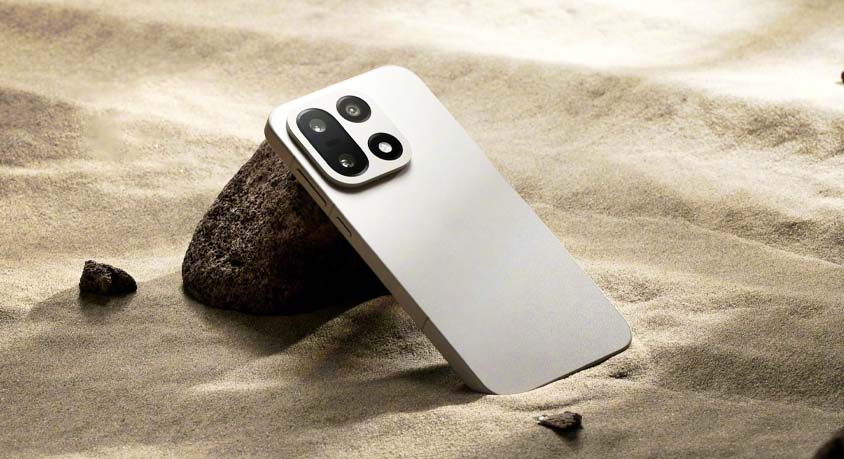
The industrial design of these devices has matured into a sophisticated mix of glass, ceramic, and aerospace-grade aluminum that feels remarkably dense and expensive in the hand. The Nothing Phone series, for instance, uses a transparent aesthetic that serves as a refreshing middle finger to the boring black slabs that have dominated the market for a decade.
These phones are not just cheaper; they are often more daring in their use of materials and textures, offering a tactile experience that makes the standard glass-sandwich design feel outdated. However, you must be prepared for a slightly heavier device, as the massive camera optics and cooling systems required for high-speed charging do add a few grams to the total weight.
Performance metrics are where the conversation usually turns to technical jargon, but the reality for the user is simple: these phones are faster than the apps we use. Equipped with the latest Snapdragon processors and up to 16GB of RAM, the OnePlus 15 handles multitasking with a fluid grace that prevents the stuttering often seen when switching between a heavy video edit and a navigation app.
The screens are equally impressive, utilizing LTPO panels that can shift from 1Hz to 120Hz, providing a butter-smooth scrolling experience while preserving battery life during static tasks like reading an e-book. You are not sacrificing "horsepower" by spending less; in many cases, you are actually getting a more responsive system.
Of course, the grass is not perfectly green on the other side, and there are significant trade-offs regarding software support and carrier compatibility that every American buyer must consider. While the hardware is world-class, the software skins can sometimes feel cluttered compared to the surgical cleanliness of stock Android or iOS, and getting one of these devices to work on every specific frequency of a US carrier can be a headache. Furthermore, the resale value of these brands is significantly lower than that of an iPhone, meaning you are buying a tool to use until it dies rather than an asset to trade in every twelve months.
For the international traveler or the digital nomad who prioritizes utility over brand prestige, these high-value flagships represent the most logical purchase in 2026. If your work requires you to be mobile and you cannot afford to be tethered to a wall outlet for hours, the charging technology alone makes these devices a productivity game-changer. You have to decide if the blue iMessage bubble and the convenience of walking into a physical Apple Store are worth the five-hundred-dollar tax and the slow-motion charging speeds of the status quo. Tech should serve your schedule, and a phone that charges in twenty minutes serves a busy human far better than a phone that takes two hours.
Disclaimer: Mention of any brand or trademark is for identification only and does not imply partnership or endorsement