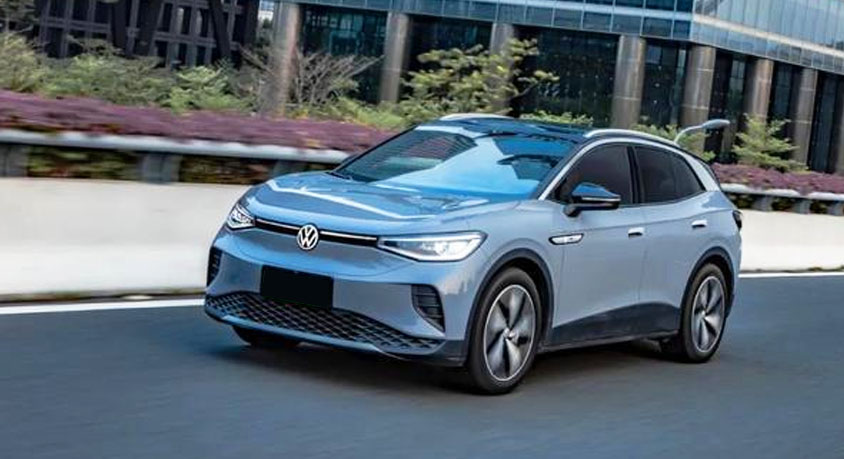
The temperature reads minus 12 degrees Fahrenheit in the parking lot of a Minneapolis Target, and the ID.4's touchscreen has just asked you to confirm, for the third time, that you really want the heated seats on. Your gloved finger stabs at the haptic slider, missing the mark repeatedly, while the car's software seems to ponder whether thermoregulation is really worth the computational overhead. This scene has played out thousands of times across the Upper Midwest over the past four years, and it nearly destroyed Volkswagen's American electric dreams. The 2026 ID.4 arrives with what the internet forums have been screaming for since day one: an admission of error. The capacitive touch sliders remain, but they're now illuminated. More importantly, Volkswagen has finally reintroduced actual buttons for core functions, and the software has been rewritten from the ground up. We spent a week with the updated model, subjecting it to the kind of brutal Minnesota winter that separates genuine engineering from optimistic marketing.
The interior transformation warrants the headline status it's receiving. For 2026, Volkswagen has addressed the single most criticized aspect of the ID.4 experience: the unlit, impossible-to-use-at-night touch panels that previously governed climate and volume. The new steering wheel features conventional buttons with physical feedback, and the center console now includes dedicated, backlit controls for temperature and audio volume. The 12.9-inch infotainment screen, carried over from recent updates, now boots instantly and responds to inputs without the infuriating lag that plagued earlier versions. The menu logic has been simplified, with climate controls permanently visible at the bottom of the screen rather than buried in submenus. For owners who simply want to adjust the temperature without consulting a user manual, the 2026 ID.4 finally delivers the experience the original should have provided at launch.
The hardware story centers on what's missing: the smaller battery option. For 2026, Volkswagen has simplified the lineup by dropping the 62-kilowatt-hour pack entirely. Every ID.4 now ships with the 82-kilowatt-hour battery (77 usable), available exclusively with the 282-horsepower rear motor or the 335-horsepower dual-motor all-wheel-drive configuration. The range figures reflect this rationalization: rear-drive models achieve 291 miles EPA-estimated range, while all-wheel-drive variants deliver 263 miles. More significantly for the heartland buyer, every 2026 ID.4 now ships with a North American Charging Standard port, granting direct access to the Tesla Supercharger network without adapters. For a family driving from Minneapolis to Sioux Falls, this eliminates the anxiety of hunting for compatible CCS stations.
The cold-weather testing reveals the gap between laboratory optimism and lived reality. At 20 degrees Fahrenheit, our rear-drive Pro model consumed energy at approximately 2.8 miles per kilowatt-hour on the highway, translating to roughly 215 miles of practical range from the usable 77-kilowatt-hour pack. This aligns with the winter range estimates published by European testing agencies, which suggest a 25 to 30 percent reduction from WLTP figures. The heat pump, optional on higher trims, moderates this loss by efficiently scavenging waste heat from the battery and motors. In the depths of a Minnesota January, however, the math remains unforgiving: a vehicle rated for 291 miles in perfect conditions becomes a 200-mile tool when the mercury drops. The charging curve adapts intelligently, preconditioning the battery when navigation routes to a fast charger, but the 175-kilowatt maximum charge rate now trails class leaders like the Hyundai Ioniq 5's 240-kilowatt capability.
The driving experience in snow rewards the ID.4's fundamental engineering honesty. The rear-wheel-drive configuration, historically associated with winter inadequacy, actually proves confidence-inspiring thanks to the instant torque modulation of electric traction control. On snow-covered county roads, the ID.4 tracks straight without the nervous steering corrections required by some front-drive competitors. The all-wheel-drive version adds a front motor that engages seamlessly when needed, though the traction benefit rarely justifies the $3,900 premium for most Midwest drivers. The suspension, tuned for comfort rather than sport, absorbs frost heaves and potholes with Germanic composure, and the cabin remains remarkably quiet even at highway speeds. Body roll through corners is noticeable but never alarming, a reminder that this vehicle prioritizes family transport over canyon carving.
The practicality story reinforces the ID.4's positioning as the sensible choice. Rear passengers enjoy 39.8 inches of legroom, genuinely competitive for the compact SUV class, and the flat floor accommodates three across without the transmission tunnel hump that complicates internal combustion vehicles. The 543-liter boot swallows a week's worth of groceries and hockey gear with room to spare, and the adjustable floor height creates useful underfloor storage for charging cables. The rear seats fold in a 60/40 split, expanding cargo capacity to accommodate the occasional furniture purchase from IKEA. Parents will appreciate the easy-access Isofix points and the wide rear door openings that simplify child seat installation.
The technology story extends beyond the screen improvements. The IQ.Drive safety suite remains standard across all trims, including adaptive cruise control, lane-centering assistance, blind-spot monitoring, and automatic emergency braking with pedestrian detection. The system now operates more naturally, with the lane centering applying gentle rather than jerky corrections. The matrix LED headlights, available on higher trims, adapt to oncoming traffic while maintaining high-beam illumination elsewhere, a genuine safety advancement for rural night driving. The 360-degree camera system, standard on Pro S Plus trim, transforms parking in tight urban garages from anxiety into precision exercise.
The compromises persist in ways that will frustrate daily users. The window switches remain the same maddening design, with two buttons controlling four windows via a rear-seat toggle. The center console cupholders, while improved, still struggle to accommodate the 32-ounce fountain drinks that define American road trips. The lack of a frunk, sacrificed to the MEB platform's packaging constraints, means charging cables compete with groceries for cargo space. The synthetic leather upholstery, while durable, feels unremarkable in a vehicle that can exceed $55,000 fully loaded. And despite the software improvements, the voice recognition system still occasionally misunderstands commands in ways that would have been embarrassing a decade ago.
The value proposition now hinges on total cost rather than purchase price. Starting at $45,095 for the Pro rear-drive model, the ID.4 undercuts the Tesla Model Y and approaches the Chevrolet Equinox EV on price. The federal tax credit eligibility, combined with state incentives in places like Colorado and California, can reduce the effective cost by thousands. The 4-year/50,000-mile warranty and 8-year/100,000-mile battery coverage provide ownership peace of mind. For the suburban family charging at home and driving within the ID.4's genuine 200-mile winter range, the operating costs drop to roughly one-third of a comparable gasoline vehicle.
Disclaimer: Mention of any brand or trademark is for identification only and does not imply partnership or endorsement